


La Nuit de Noël
December 6 2025 @ St John’s Kirk
Saturday in St. John’s Kirk was Chansons’ (Perth’s own versatile chamber choir) hugely enjoyable Christmas Concert. Under their continuing, sympathetic Musical Director Areti Lymperpopoulou they covered centuries from Sixteenth to the present day, beginning with the optimistic rising tones of Palestrina’s Exult in God, a jubilant piece followed, in tones of awe, by Victoria’s more restrained O Magnum Mysterium. Bruckner, more Romantic in tone, harmony and dynamics, gave Virga Jesse floruit, impressive in its devotional air with notable tenors in the Alleluia section.

A rarity, Rossini’s Christmas Night, brought the appearance of excellent Bass soloist Phil Gault in a gentle, open-hearted piece bringing spontaneous applause for soloist, choir and Le bon Dieu.
The first half ended with Schubert’s Mass No.2, a generous musical experience, gentle in G Major, of melodic charm, biased to music rather then dogma, and to his then adored soprano, tonight in the most able form of Colleen Nicoll.
Moving to more recent times Chansons were gently engaging in Howells A Spotless Rose, of subtle beauty with a folksong basis. Will Todd’s My Lord Has Come was the most exciting new work; modern, but immediately appealing, a powerful piece. Chansons excelled in the Spiritual-inspired rhythmic energy of Marques Garrett’s The Saviour’s Birth, contrasting with Sally Beamish’s In the Stillness of the Night, a contemplation with clearest diction.
Two Solo items followed: Saint-Saëns’ Domine, ego credidi, a repetitive, hectoring piece and Adolphe Adam’s version of O Holy Night, sounding like a pious Victorian ballad. Saving grace was that they were excellently sung by respectively tenor David Douglas and soprano Colleen Nicoll.
Cecilia McDowall ended the printed programme with A Heavenly Song, lustily sung and In Dulci Jubilo, with bounce and a different tune but all the joy of the original.
Between them came an interesting interlude: Phil Gault returned saying “You’ve spent too much time listening to beautiful music….. without participation,” then inimitably leading off himself choir and audience in a wildly amusing, hand-mimed The Twelve Days of Christmas.
After that Chansons invited the audience to enjoy a superb Christmas selection of cakes and wine.
Ian Stuart Hunter
Mass in Blue – Will Todd
September 13 2025 @ St John’s Kirk Perth
A large and appreciative audience attended Chansons’ Autumn Concert in St John’s Kirk. The programme contained choral pieces by composers of the 20th and 21st centuries; contemporary but easy to listen to.
Bernstein’s ‘Choral Warm-up’ opened proceedings – catchy, rhythmic and tuneful, showing the choir’s versatility. Three more reflective songs followed: ‘Autumn’ by Gjeilo, ‘Seal Lullaby’ by Whitacre and ‘Shenandoah’ by Erb. In these the choir’s sustained and well-balanced legato line was very evident, with vivid dynamic contrasts well defined.
Two English folk-song arrangements followed: ‘Dark Eyed Sailor’ and ‘The Lover’s Ghost’ by that master of folksong arranging – Vaughan Williams. The choir rose magnificently to the challenges posed in these arrangements giving expressive accounts of both.
Will Todd’s ‘The Rose’ and Esenvalds’ ‘Only in Sleep were in more reflective mood and were sung with great expression – all very moving.
The first half closed with a very rhythmic performances of ‘I got Rhythm’ by Gershwin.
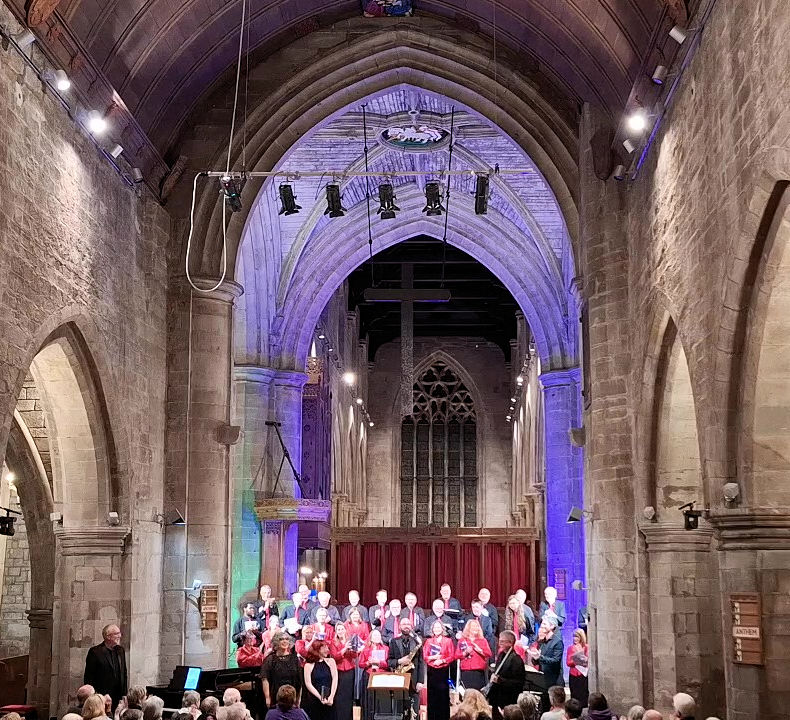
The second half contained only one work – ‘Mass in Blue’ by Will Todd. For this jazz inspired piece, the choir was joined by soprano Eilidh Bisset, and a quartet of Andrew Mann (alto saxophone), Gordon Murch (piano), Peter Murch (drums) and Graham Robb (bass guitar).
The work’s challenges are mostly rhythmic, even in the slower sections; there are some huge climaxes and other more lyrical passages.
Eilidh Bisset proved to be an excellent choice of soloist, with a wide vocal range and a wide range of dynamic contrast. She was well-supported by the choir which excelled itself throughout, as did the instrumentalists.
Final congratulations to conductor, Areti Lymperopoulou for putting together a very varied and enjoyable programme, directed with her customary dynamism.
Alister Y Allan
Jubilate
From a review published in the Perthshire Advertiser of Chansons’ Spring Concert in St John’s Kirk, Perth on Saturday, 12th April 2025, by Ian Stuart-Hunter.
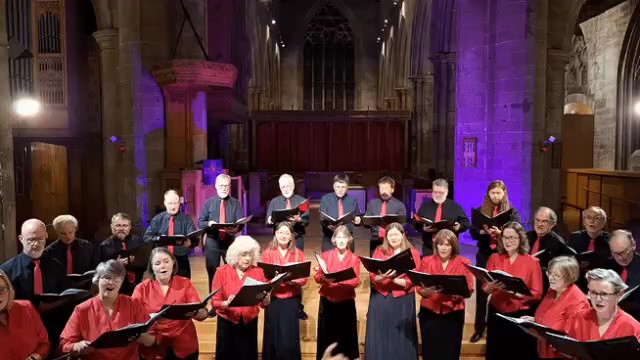
Jubilate was the title for their, as usual, very generous concert given by Perth’s own Chamber Choir – Chansons.
A well-filled St John’s Kirk heard a programme under the inspiring leadership of Areti Lymperpopoulou, beginning a capella in fine tone with the gently, friendly yet distinctive Ubi Caritas (1978) of Ola Gjeilo. This was followed by the mildly folk-songish Linden Lea of Vaughan Williams.
Plus organ, the ancient text of Ave Maria was given rich harmonies in a gently rolling dynamic style by Javier Busto – ending in a slightly soupy Amen. Purcell’s Hear my prayer was a composition which had more science, but less feeling. Unlike the thoroughly likeable and entertaining organ solo given by Howard Duthie of Festing’s Largo, Allegro, Aria and Variations.
A new take on Amazing Grace, starting with soprano solo against a hummed background by Latvian Ēriks Ešenvalds enjoyably became intriguingly richer in ringing the changes. Three well-sung spiritual arrangements by Moses Hogan (1957-2003), used religious metaphors in cleverly disguised references to the Underground Railroad, helping slaves to escape the Confederacy. Eric Whatacre’s take off publication With Lily in my Hand ended the first half with variety of texture.
Mendelssohn’s Psalm 43 – Richte mich, Gott had full, confident choral sound: melodic and with conviction in God’s judgement. Plus solo cello and organ J.S.Bach’s sectional Motet: Lobet den Herrn BWV230 began joyously contrapuntal, before a slower centre and finally virtuoso Alleluias. The solo cello of Jeremy Fletcher had its spotlight in three dance movements from Bach’s Suite BWV1010.
Two Purcell pieces ended the programme: the sectional, with fine solo tenor, Latin Motet Quam multi sunt (Z135) moved from complaint, through supplication, to thankfulness. And Purcell’s Jubilate, with fine full choir sections, almost proto-Handel in magnificence, and solo sections, before The Lord is Great and a sonorous Amen.
Ian Stuart-Hunter
Carols for Christmas
A review published in the Perthshire Advertiser of Chansons’ Christmas Concert in St Ninian’s Cathedral, Perth on Saturday, 7th December 2024, by Ian Stuart-Hunter.
Seasonal Showcase at Chansons Concert
The Christmas concert by Chansons, Perth’s excellent chamber choir under the expressive conductorship of Areti Lymperopoulou, is always a cornucopia of delights. Covering the period from early 16th century to right up to date, their versatility in a range of styles was immense.
The packed St. Ninian’s Cathedral first heard this music to please and entertain in the joyously rhythmic Sweelink’s Hodie Christus natus est where sections of the choir called out the good news to each other. Hidden under the title Adventi ének was Kodály’s arrangement of Veni, veni Emmmanuel , the men of Chansons strong and the cries of Gaude (Rejoice) inspiring.
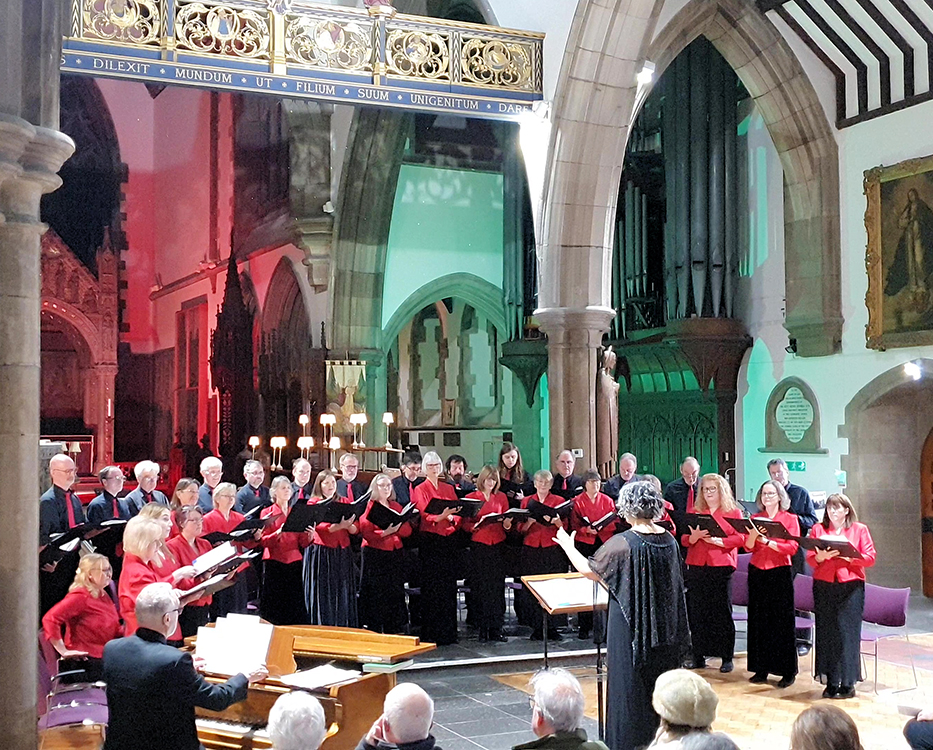
Vaughan Williams All in the Morning showed the choir’s clarity of diction – including fitting in too many syllables in too short a musical space! Il est né le divin enfant was almost orchestral, the basses providing the drums. Gabrieli’s Beata es virgo Maria is not strictly a carol, but a fine devotional work, the many parts well co-ordinated. Most pieces were a capella but long serving accompanist Gordon Murch played the tinkly piano part to John Rutter’s invitation to the shepherds Quittez, pasteurs. The march like Pat-a-Pan with flute, percussion and piano ended the first third, a rousing climax fading to the distance.
Just writing the titles would fill up my word count, but in the second third Victoria’s Duo Seraphim was a showcase for the women of Chansons and, after another VW folk song, all well deserved a drink for their Wassail Song.
The finest musical piece of the concert, wonderfully impressive, was Rejoice, O Virgin from Rachmaninov’s All Night Vigil: superb sustained melody and depth of feeling. Showing quality, no less than seven solo voices were heard in Flecha’s surprisingly modern sounding The Virgin’s Gift of 1556.
Many other delights followed before Gordon Murch’s affecting setting of Longfellow’s poem The Bells of Christmas. A notable tenor solo contribution came from Andrew Davidson as the sole voice protesting against war.
Ian Stuart-Hunter
Opera Choruses
A review published in the Perthshire Advertiser of Chansons’ Spring 2024 Concert in St John’s Kirk, Perth on Saturday, 20th April 2024
by Alister Y. Allan
CHANSONS’ SUPERB OPERA EVENING
On Saturday night, Perth’s Chamber Choir presented a varied programme of operatic excerpts to a large audience in St John’s Kirk. Conducted by Areti Lymperopoulou, and accompanied by Andrew Johnston (piano) the audience was treated to a really wonderful musical pot-pourri.
The opening chorus was the Bell Chorus from ‘Pagliacci’ by Leoncavallo, and, from the outset, the fine balance in the voice parts was evident.
Purcell was featured next: three short choruses from ‘Dido and Aeneas’, the last of which was an “echo chorus” – ‘In our deep-vaulted cell’. The extracts closed with Dido’s Lament, stylistically sung by Louise Blundell and the final chorus – ‘With drooping wings’.
The male chorus gave a wonderful rendition of ‘O Isis and Osiris’ (Magic Flute) to begin a section of Mozart extracts. Ian Osborne sang a well-paced ‘Si vuol ballare’; Yvonne Connell sang a finely-phrased ‘Voi che sapete’; Rhiannon Miller sang ‘L’ho perduta’ superbly, and Sally Hunter and Cath Peebles sang the ‘Letter Duet’ – all these from ‘The Marriage of Figaro’.
‘Idomeneo’ was featured: the chorus ‘Placido e il mar’ with Morna Strachan a silvery-toned soprano soloist.
Extracts from ‘Don Giovanni’ followed with Kenneth Thomson-Duncan singing sensitively the Don’s serenade, and Morna Strachan and John Howie performing a nicely balanced duet ‘La ci darem la mano’.
The first half closed with a rousing performance of the Janissaries Chorus from ‘Die Entfuehrung aus dem Serail’.
The second half began with music by Rossini: the Villagers’ Chorus from ‘William Tell’ – beautifully balanced singing, and the famous ‘Cats’ Duet’ in which Cath Peebles and Helen Brand brought out the comedy element perfectly.
Bizet’s ‘Carmen’ followed – the opening chorus of Act IV. This was delivered with a real feeling of flamboyance.
Verdi featured, from ‘Macbeth’ the ‘Chorus of the Scottish Refugees’ and ‘The Witches’ Spell and Chorus’ (ladies). The atmosphere of this, at times, dark emotional opera was caught very well. ‘The Anvil Chorus’ (Il Trovatore) and ‘Chorus of the Hebrew Slaves’ (Nabucco) ended this part of the programme.
The programme closed with music by Sullivan. First, his part-song, ‘The Long Day Closes’, full of Victorian sentiment – I found this very moving. Then, there were extracts from four of his operettas. The chorus ‘Eagle High’ from ‘Utopia Limited’, from ‘The Mikado’ –‘Behold, the Lord High Executioner’ (male chorus with soloist, Ian Osborne) and the madrigal (Act II) sung by a well-balanced quartet of Rhiannon Miller, Lindsay Davidson, Andrew Davidson and David Cairns.
There followed ‘When anger spreads his wing’ from ‘Princess Ida’, which had a difficult section of “vocal patter” for the men, and the final chorus from ‘The Gondoliers’ which brought the superb evening to an end.
We were rewarded with an Encore – ‘I got rhythm’ by Gershwin featuring Helen Brand as a splendid soloist.
Alister Y. Allan
Gloria
From the press review submitted to the Perthshire Advertiser
by Ian Stuart-Hunter
Perth’s own chamber choir Chansons gave their December concert in the historic St John’s Kirk mixing a first half of mainly seasonal items with two major works by Haydn and Vivaldi.
Under conductor Areti Lymperopoulou they began joyously with two Mendelssohn pieces of rejoicing: first with pealing tones, next with expectation. Then Mary Went Through a Forest of Thorns by Stefan Claas, called in the programme ‘a personal friend of the choir’. This impressed in its honesty and storytelling.
Four English pieces with a Tudor style followed, two of the time (by Tallis), two 2oth century (Peter Warlock). With good diction and bass notes, then a brightness and a sense of wonder these are where Chansons excels.
They were good too at the tricky rhythms and disjunctions of Cecilia McDowall’s 1951 Of a Rose and gave a most moving performance of The Lamb by John Tavener. Sally Hunter set off Holst’s extended This Have I Done For My True Love with a confident solo, before the first half ended with Haydn’s Little Organ Mass of gentle, airily classical tread. We heard the finely sung Amens much sooner than we would have thought, due to the then practice of singing different lines concurrently… and confusingly! An enjoyable soloist in the was Colleen McNicoll, with solo organ Howard Duthie, in the Benedictus.
The small orchestra of the Haydn was enlarged and with an excellent trumpet and oboe, for Vivaldi’s famous Gloria RV589. Collen McNicoll was joined mellifluously by Sioned Gwen Davies, mezzo, in the Laudamus duet. From the cries of Gloria at the start, reprised with different words at the end Chansons were engaged and lively. Their fugues impressed. Sioned Gwen Davies was rhythmic and exciting in her solo aria.
Altogether an excellent and involving concert in a very different style than their Opera choruses planned for 2oth April 2024.
Ian Stuart-Hunter
Fauré : Requiem
From the press review submitted to the Perthshire Advertiser
by Ian Stuart-Hunter
Perth’s own chamber choir Chansons, under their enthusiastic conductor Areti Lymperopoulou, gave a wide-ranging Autumn concert in St John’s Kirk.
Vaughan Williams opened: Te Deum and “Easter” from Five Mystical Songs. The first was a bright, happy start to the evening. Chansons made the most of VW’s communicative word-setting. From the opening praise the work quietened to a plea for the Lord to fulfill his side. “Easter” introduced the formidable baritone soloist Phil Gault. His was the forthrightly delivered main part with Chansons seconding him.
Palestrina’s Ecce nunc benedicite, solely for the men, gathered in a semi-circle around Areti Lymperopoulou, was an a cappella of quiet devotion.
Two Liszt Motets followed: Ave verum corpus of quiet piety and, with a cushioned lyrical start, Ave Maria. Longer was a setting by Giuseppe Verdi of the Pater Noster. The soprano line was well sung and the basses ended with a spectacular low note.
Most expressive was Poulenc’s Litanies à la Vièrge Noire, written for three-part women’s voices and organ, here ably played by Howard Duthie. Both choir and sections handled Poulenc’s melodies with confidence.
A joyous end to part one was The Battle of Jericho, the men starting a rhythmic ostinato. Cascading voices fitted the walls tumblin’ down and a stratospheric soprano high note ended the piece.
Chansons brought out its quality of peace and consolation in Fauré’s Requiem. Fellow feeling came first from the tenors, then, in glorious melodies, the sopranos’ response. The Offertory sympathized: Phil Gault’s baritone a request not a demand. Chansons’ Sanctus was airy and flowing, with splendid tone at Hosanna.
The second soloist of the evening was soprano Amy Spearing in Pie Jesu, her duet with the organ of Howard Duthie. Its high line gentle, it was an affecting movement of beauty.
After Chansons’ fine and flowing Agnus Dei, Phil Gault was too hectoring in the Libera Me. Peace and serenity were restored by superb singing of In Paradisum. Chansons can be well pleased by the resonant applause in a well-filled St John’s Kirk.
Ian Stuart-Hunter
Chansons des Roses
From the press review submitted to the Perthshire Advertiser
by Ian Stuart-Hunter
Amidst the recent dearth of concerts that by Perth’s own chamber choir Chansons was a beacon. Sounding superb they covered an immense range from Ravenscroft, early 17th century, to Morten Laudridsen’s 1993 work Chanson des Roses, giving this concert its title.
Beginning with two Elgar Partsongs, Eric Whitacre’s Sleep, a modern classic well delivered, and Holst’s Eastern Pictures, Chansons quality was clear: confidence in their conductor Areti Lymperopoulou, distinct lines , yet sounding together and the men giving a plush cushion to the sound.
The choral Dances from Britten’s Gloriana came over well, from calm progress through the swing and bounce of the dance, the fast scherzo to the loyalty and support of the final piece.
For Ravenscroft’s We Be Soldiers Three, Areti Lymperopoulou left her podium and hid, still directing, behind a pillar so that the acting of the men in this rhythmic drinking song could be appreciated. Berlioz’s Chant des Bretons was patriotic, too, rather more refined. Ola Gjeilo’s The Ground was a gently rocking and aspirationally tuneful end to the first half.
Two graceful and melodious items from Debussy’s Petite Suite, heard with pleasure from Gordon Murch and Areti Lymperopoulou, began the second half, before Vaughan Williams impressive Three Shakespeare Songs. Lauridsen’s five settings of poems were eloquently sung in good French, the last having a quite beautiful melodic tag.
Insalata Italiana was a piece of nonsense and great fun. Mostly musical terms put together by the librettist of Die Fledermaus as an operatic parody. Alister Allan was the notable baddie pushing his way to the front – O cielo (Oh, Heavens!) was the choir’s response. It ended with two sopranos fighting to sing the high note of their cadenza.
The enjoyable narrative of The Piper O’Dundee ended a well received, well sung evening. The excellence of Chansons is further enhanced.
Ian Stuart-Hunter
Christmas and All That Jazz!
From the press review submitted to the Perthshire Advertiser December 2022
Festive music went with a swing
BY IAN STUART-HUNTER
In an innovation to the usual carol concert, Chansons, Perth’s chamber choir under the direction of Areti Lymperopoulou, had a concert of two halves titled ‘Christmas and all that Jazz!’.
The first section was what would be expected at this time of year, while the second came with the excellent jazz trio of Gordon Murch, Paul Vaughan and Andrew Fraser, offering more jazz-inspired works.
Further, it was a charity concert in aid of Tayside and Strathearn Help for Ukraine and the huge and generous local support already and continuing to be given was outlined.
A word here for the excellent programme booklet: colourful, well laid out, interesting helpful information on TASAH4Ukraine and all the individual works.
Beginning with the Bach, we heard the opening chorus from his first Christmas Cantata: a ceremonial organ introduction then a joyous, dance-like chorus with radiant sopranos.
An unusual vocal fanfare by American Randall Thomson was followed by the first of two John Rutter pieces: What Sweeter Music; comforting and inclusive.
More devotional but very French was Duruflé’s Motet Ubi Caritas (Where Charity and Love Are), with its basis of Gregorian Chant.
Fine interpretations of two Willcocks Arrangements, Joubert’s strong Torches, and a beautifully lilting Berlioz Shepherd’s Farewell closed the first half.
The rustic piping for the Berlioz was amplified in the second half by Howard Duthie’s organ solo of Festmusikk, rather like a Dutch canal’s Orchestrion.
The swing and life of jazz infused from there on: Hark the Herald Angels Sing with excellent jazzy piano; Kirby Shaw taking popular songs, including Rudolf and Frosty; an inventive Little Town In Five instrumental from the Trio; and finally three traditional carols with a jazz treatment.
Altogether an interesting, informative and greatly enjoyable concert from Chansons – but what else would one expect from a group with their quality?
Ian Stuart-Hunter
Bach Jesu Meine Freude
Mozart Missa Brevis in D major
Published in the Perth Advertiser: Tuesday 27 December 2022
Let’s sing praises of Perth’s Chansons
By IAN STUART-HUNTER
Perth can rejoice in Chansons, its very own chamber choir and. to judge by the well-filled nave of St John’s Kirk and the appreciative audience, a goodly number already know this.
Always an excellent choir, under their conductor Areti Lyrnperopoulou they gave huge musical enjoyment especially in more extensive works by JS. Bach and Mozart.
They began with three short a capella works: James MacMillan’s Sedebit Ominus Rex, the Latin start of which reminded of cantillation, the piece’s style more easily communicated when it turned to English. Turning to Bruckner’s Os Justi, a theme of the evening became clear; the righteous will be supported. This and his Ave Maria (first setting) was devotionally given with lines clear, stylish singing throughout.
With cello and organ, the first major complicated work was J.S.8ach’s longest motet Jesu meine Freude. Over eleven sections it consisted of Chorales – largely representing the people – and passages from Romans, surrounding a central vocal fugue well brought off by Chansons and precisely directed by their conductor.
Part two had a more human appeal beginning with Schubert’s God is my Shepherd. With organ the women’s voices sang with trusting confidence and the promise of eternal rest.
Bruckner’s Locus iste given with confidence and rock solid singing followed, before Fauré’s Tu es Petrus sonorously started by baritone Phil Gault.
The main delight of the evening, where four able soloists joined Chansons, was Mozart’s Missa brevis in D Major K194. A smilingly joyful Kyrie started the piece with baritone introducing the alternating solo/choir sections of the Gloria.
In the Credo the irksome restrictions of Mozart’s Archbishop towards briefness were felt: everything rushing by.
The choral Sanctus and Osanna allowed a welcome slight extension.
The Benedictus showcased the four soloists, the Osanna appearing again. The final Agnus Dei was a nicely concerted number, the mezzo Ulrike Wutscher, adding some ornamentation, a culmination to an evening of considerable success.
IAN STUART-HUNTER
SPRING SERENADE – Concert Review
Published in the Perth Advertiser: Thursday 10 June 2021
Spring Serenade was the title of Chansons’ well attended and well received concert in the historic St.John’s Kirk, Perth.
Chansons have always been an excellent local choir and under their conductor Areti Lymperopoulou they gave huge musical enjoyment in works ranging from the Elizabethans Morley and Dowland, through 20th century greats Holst, Poulenc and Kodaly to contemporary.
Largely unaccompanied, occasionally lutenist Eric Thomas seconded them, himself in solos: Dowland’s Lacrimae Pavan and its divisions and a lively Frogg Galliard, both dances having line and impulse.
Chansons began with two madrigals embodying Spring and love. These were given with a precise freshness in clear diction. The pay-offs clear in intent. Poulenc’s Salve Regina had both conviction and clarity in the differing registers of the choir. Fervency was there, too, in the two Kodály items, first in the nonsense verse then more seriously in the second dedicated to anyone far from home, thinking particularly of the people of Ukraine. And a nice low note from the basses at the end.
With Eric Thomas Songes or Ayres by Dowland came next, first from the choir then Carol Osborne stepping forward for the solo Fine Knacks For Ladies with good ornamentation. Sun, in the form of the beloved was present in bright distinct tones in Marenzio’s madrigal, before the Aegean folksong above an ostinato in Constantinidis’ Girl from Smyrna.
Csemliczky’s Our Father was finely set beautifully sung. The humanity of the singing came over well in Orbán’s Nunc Dimittis. The most difficult music of the evening was probably Gesualdo’s dark, chromatic O Vos Omnes, poignant in dolor sicut meus (sorrow like mine).
Light came again in Dowland with the hymn-like Come Again Sweet Love and a solo contribution from tenor Andrew Davidson, then Tomkins See, See The Shepherds’ Queen adding rejoicing and Fa la las.
Most extended of the evening were Holst’s Six Choral Folksongs: Spring mentioned again, then almost a tongue twister. Morag Gaskin’s good, smooth voice was solo in Matthew, Mark And Luke And John and the humming drone of the men in verse two.
The Blacksmith used a well-known folksong and good rhythm imitating hammer and anvil. The narrative was well sustained in I Love My Love intertwined finely with the chorus. Most impressive was Swansea Town, strongly sung and with a sting in the tail. A bit of fun to finish with was Simon Mold’s arrangement of five Nursery Rhymes, sending the large audience home with smiles on their faces. A total success, even the programme was beautiful.
Ian Stuart-Hunter
Published : Thursday 10 June 2021
STEFAN CLAAS 1968 -2021
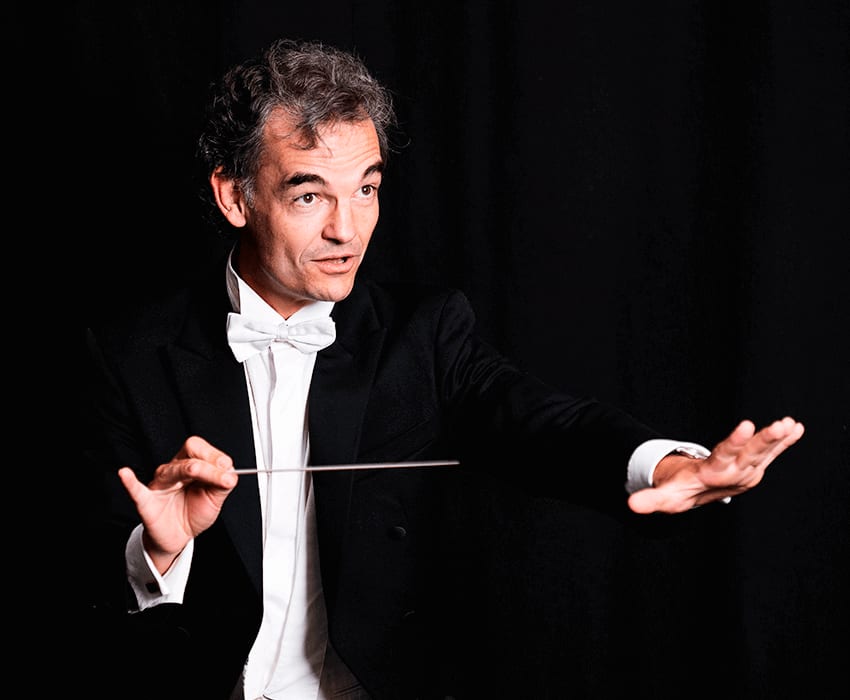
We were extremely saddened to learn of the passing of Stefan Claas on 16 November. Stefan was a highly respected, much loved and talented singer, choir director, music lecturer, composer and friend of Chansons.
Members of Chansons had the privilege of singing under Stefan’s direction in 2016 as we took on Bruckner’s Mass in E minor as a joint choir with Ars Antiqua at Perth Concert Hall. And, more recently during our visit to Aschaffenburg in 2019 where once again the choirs joined forces.
Our thoughts remain with Stefan’s family, friends and of course the members of Ars Antiqua.